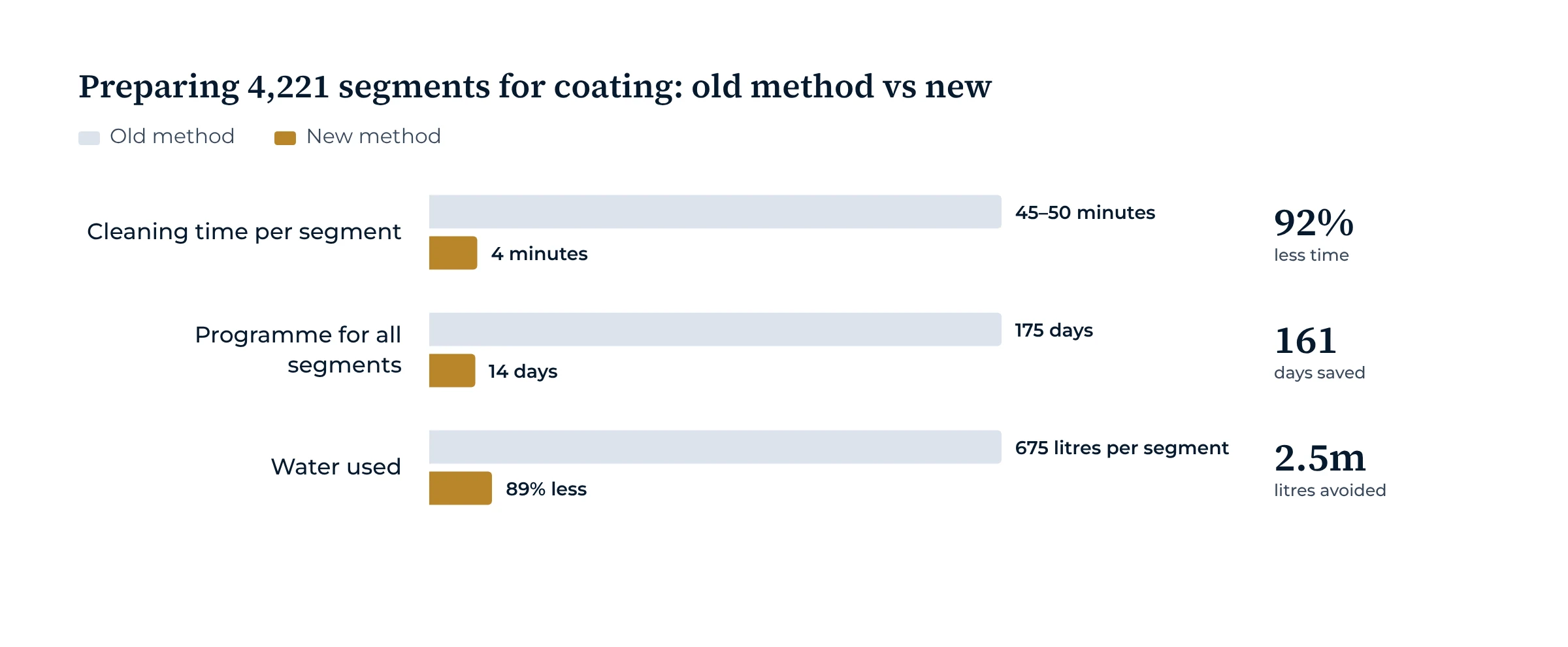
92% faster segment preparation, with 2.5 million litres of water saved
Challenging the method and the specification cut segment cleaning from 50 minutes to 4, saved 2.5 million litres of water and removed a step altogether.
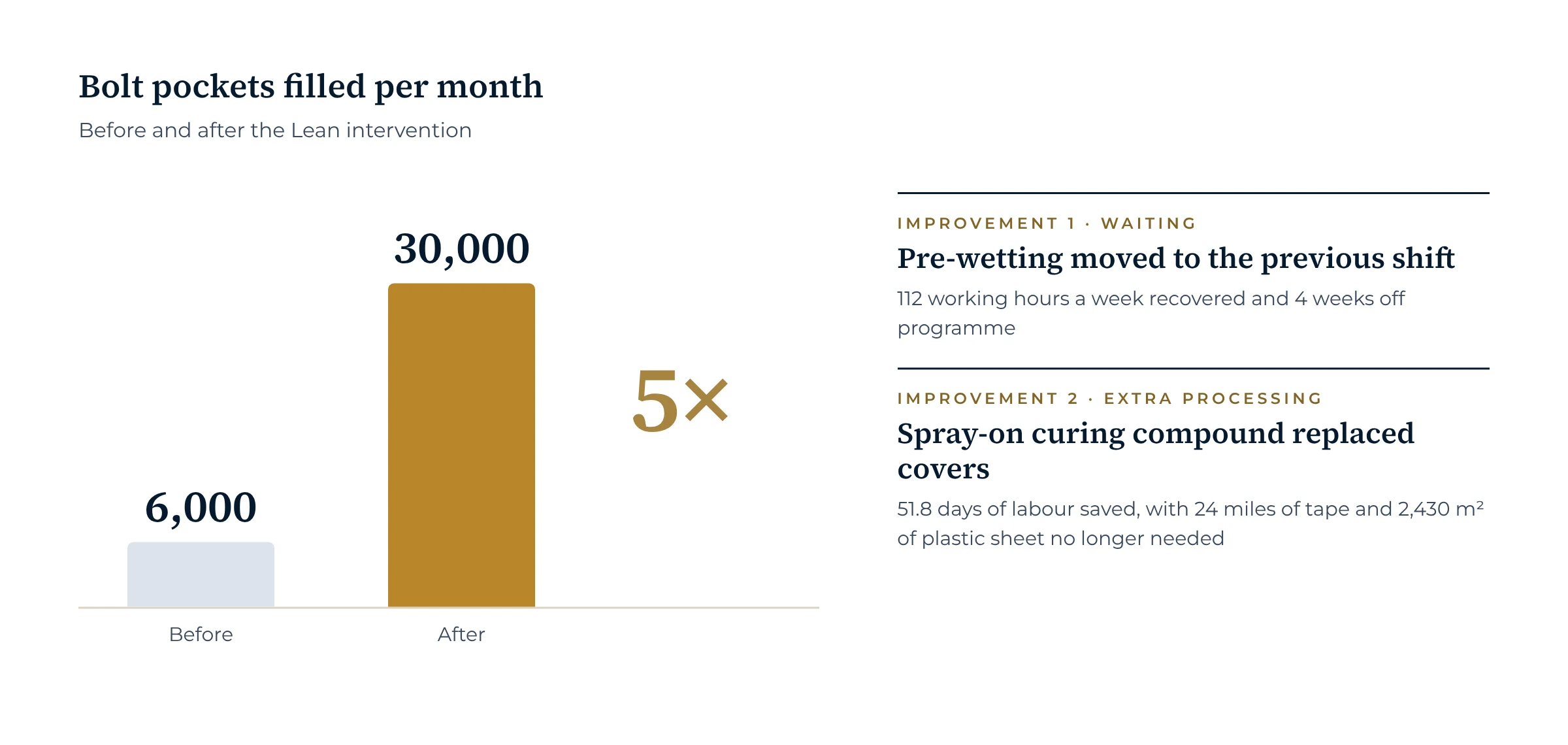
Read the case studyEvery concrete segment lining the cooling-water tunnels is bolted in place, and every bolt pocket then has to be filled by hand. At the original rate the work would have run for months on the critical path. By removing waiting and extra processing, the team went from around 6,000 pockets a month to 30,000.
Bolt pocket infilling is repetitive, manual work: remove the temporary bolt, prepare and wet the pocket, fill it with mortar and let it cure. With more than 127,000 pockets still to fill, it sat squarely on the critical path.
The team was averaging about 1,500 pockets a week. At that rate, finishing would have taken months longer than the programme allowed.
We mapped the process step by step, classifying each step as value-adding, value-enabling or non-value-adding. Two sources of waste stood out.
Each pocket must be wetted for two hours before filling to meet the manufacturer’s specification. Only two to four people were needed for this, so the rest of the finishers waited. Now the previous shift removes bolts, cleans and pre-wets the pockets, so the next shift starts filling straight away. That recovered 112 working hours a week for an eight-person team and filled 1,120 more pockets a week.
Every filled pocket was covered with plastic sheet and taped down to help it cure, then uncovered later. A curing compound does the same job with nothing to fit or remove. Across the remaining 127,000 pockets that saves 51.8 days of labour and gains 120 value-adding hours a week.
We help construction and manufacturing organisations find and remove the waste that slows delivery, at any scale. Let’s talk about where yours is.