Case study 02 · Bolt pocket infilling
Five times the output on a critical-path task
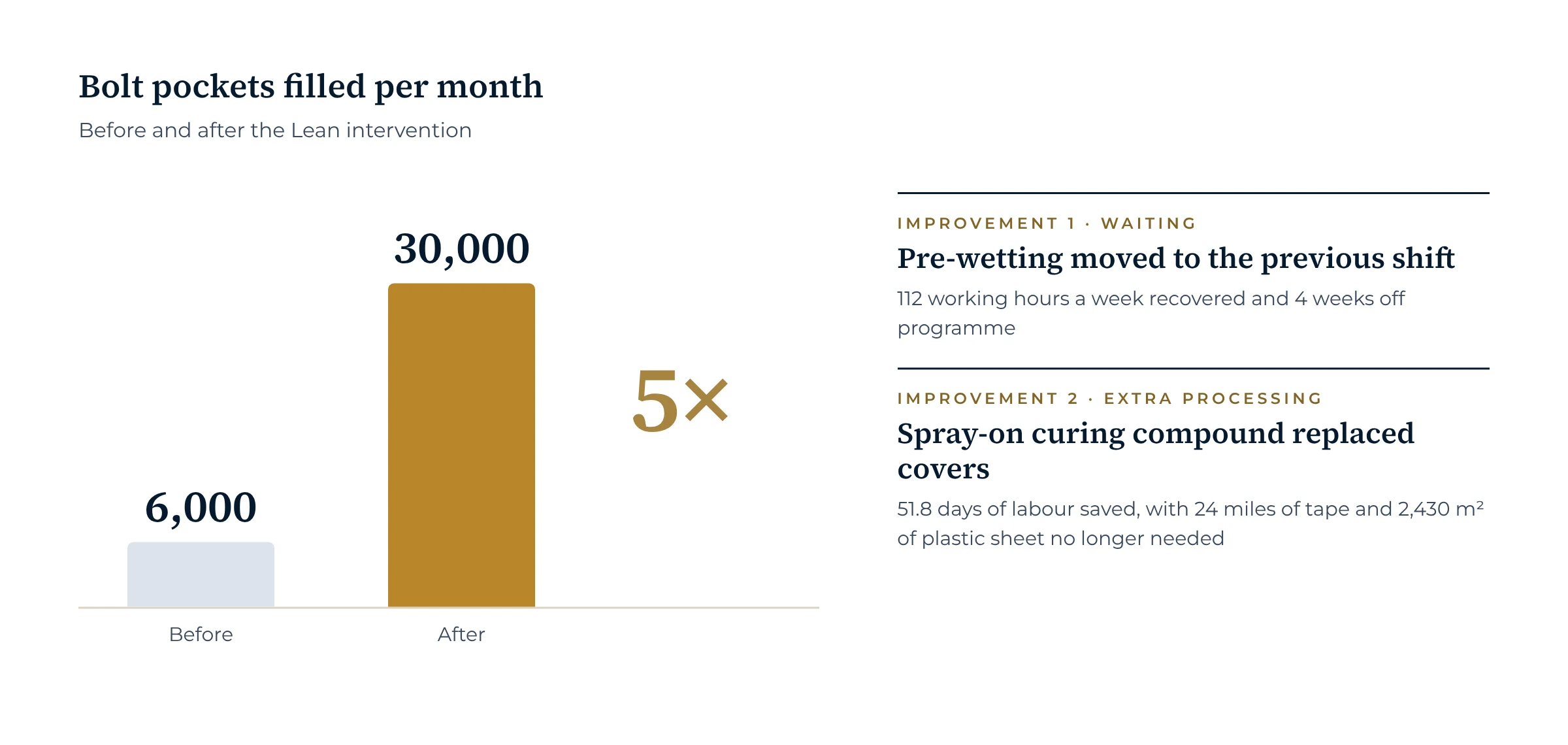
Two simple changes took bolt pocket infilling from about 6,000 a month to 30,000, taking 17 weeks off the programme.
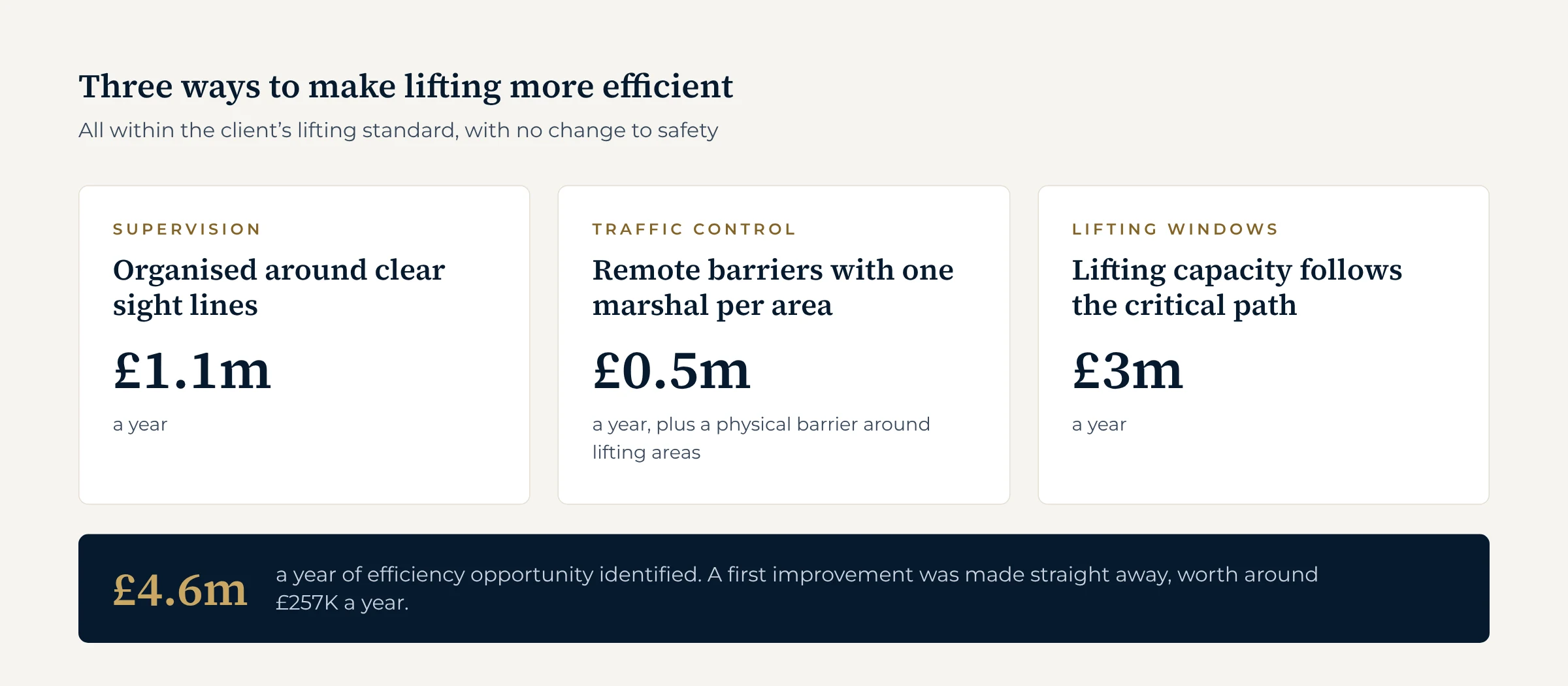
Read the case studySubcontract costs were running 10% above plan, and the lifting operation was one of the largest teams on the job. We were asked to find where it could work more efficiently without affecting safety, quality or delivery. Working strictly within the client’s lifting standard, we identified up to £4.6m a year of efficiency opportunity.
The lifting operation was around 104 people, organised into three gangs at each tunnel location across a shift pattern. Every role was set by the client’s lifting standard, which governs supervision and limits the dual roles that are normal on other sites.
Gang sizes were fixed regardless of how busy each location was. In quieter areas, skilled people spent time waiting for lifts while the critical path set the pace elsewhere.
We reviewed the lifting standard line by line, observed live operations at two tunnel locations and worked through each role with section managers. The aim was to match lifting resource to the work, and every proposal had to stay within the standard.
The standard requires a second lift supervisor only when one cannot practicably see both the slinging and the landing. From a raised viewing point, one supervisor could see both, so supervision could be organised around clear sight lines rather than a fixed pair at every lift.
Marshals were already covering for each other during breaks without losing control of traffic. Remote-operated barriers, controlled by one marshal per area, would add a physical barrier around lifting areas and free marshals for other duties.
One gang would follow the critical path while a second worked planned lifting windows across the quieter locations, so lifting capacity goes where the work is instead of waiting where it isn’t.
We help construction and manufacturing organisations find and remove the waste that slows delivery, at any scale. Let’s talk about where yours is.