Case study 02 · Bolt pocket infilling
Five times the output on a critical-path task
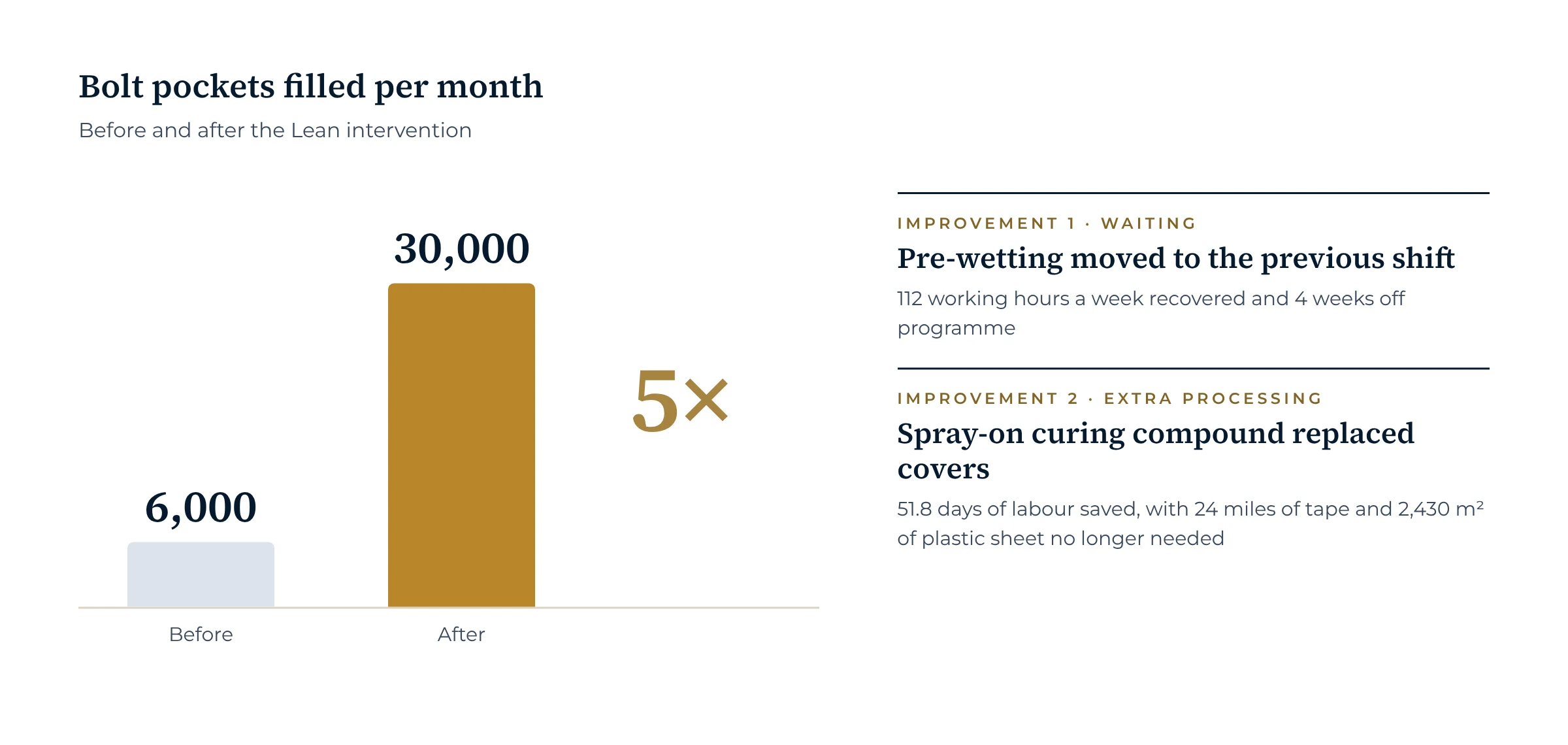
Two simple changes took bolt pocket infilling from about 6,000 a month to 30,000, taking 17 weeks off the programme.
Read the case studyEach cooling-water tunnel has to be stripped of temporary services, repaired and handed over to the client section by section. The first handover took 90 days, and the larger tunnels risked taking twice as long, with contractual penalties at stake. We captured what the team had learned and turned it into a plan for the next tunnel.
After tunnelling, each tunnel is stripped of the services that supported construction, then scanned and repaired before the client’s surveillance and delivery teams sign it off. The first, shorter tunnel took 90 days to hand over, and the two larger tunnels risked taking up to 180.
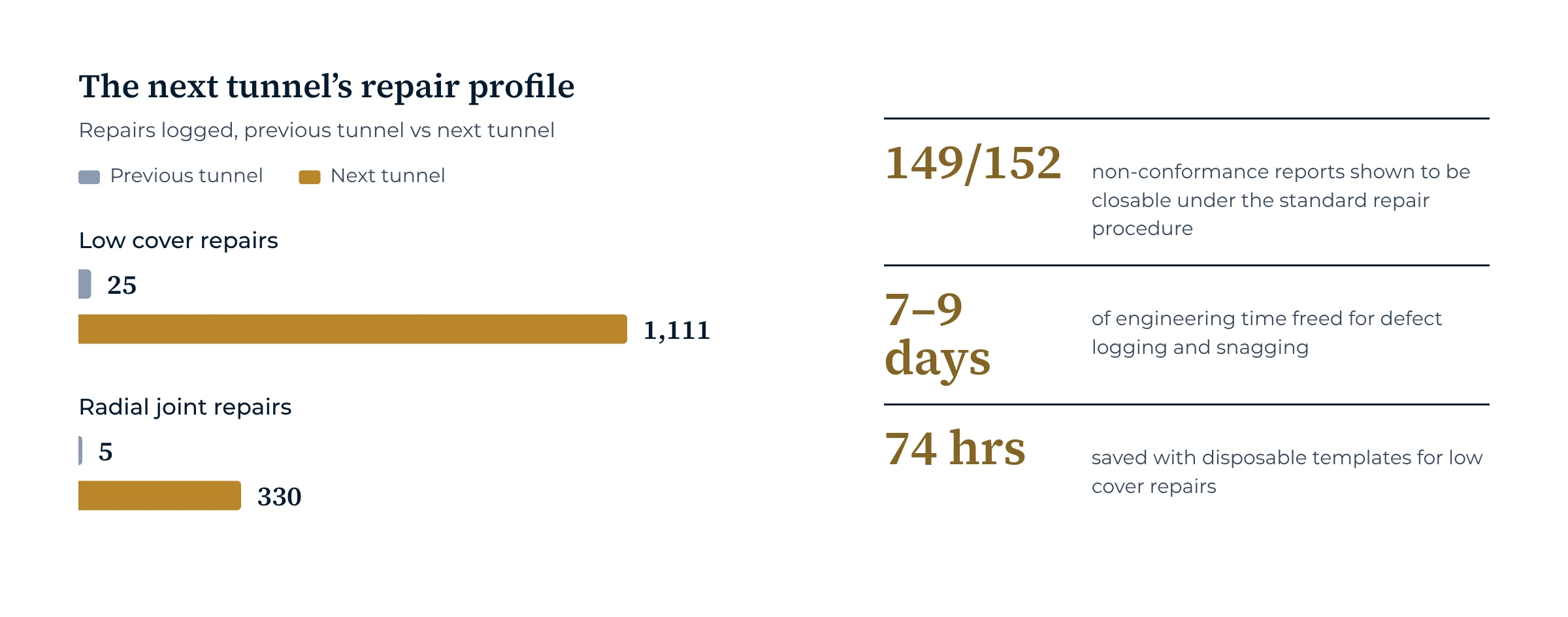
The final tunnel had a fixed window of around 12 weeks and a very different repair profile, with low cover repairs up from 25 to 1,111 and radial joint repairs up from 5 to 330.
We ran two lessons-learned workshops, one internal and one with the client’s surveillance and delivery teams. We observed strip-out, repairs, snagging and handover over several days, and analysed scan and repair data for the next tunnel.
Strong collaboration with the client, early engagement with the surveillance team and lessons carried over from the previous tunnel had already improved section handovers.
Slow defect logging, resources split across areas with no logical sequence, little time to plan between tunnels, snagging that relied on repeat inspections and limited hands-on training.
About 75% of the next tunnel’s repairs were in the invert and front-loaded. One platform zone had held 1,656 recorded issues, against 121 across the rest of the tunnel.
We help construction and manufacturing organisations find and remove the waste that slows delivery, at any scale. Let’s talk about where yours is.