Case study 02 · Bolt pocket infilling
Five times the output on a critical-path task
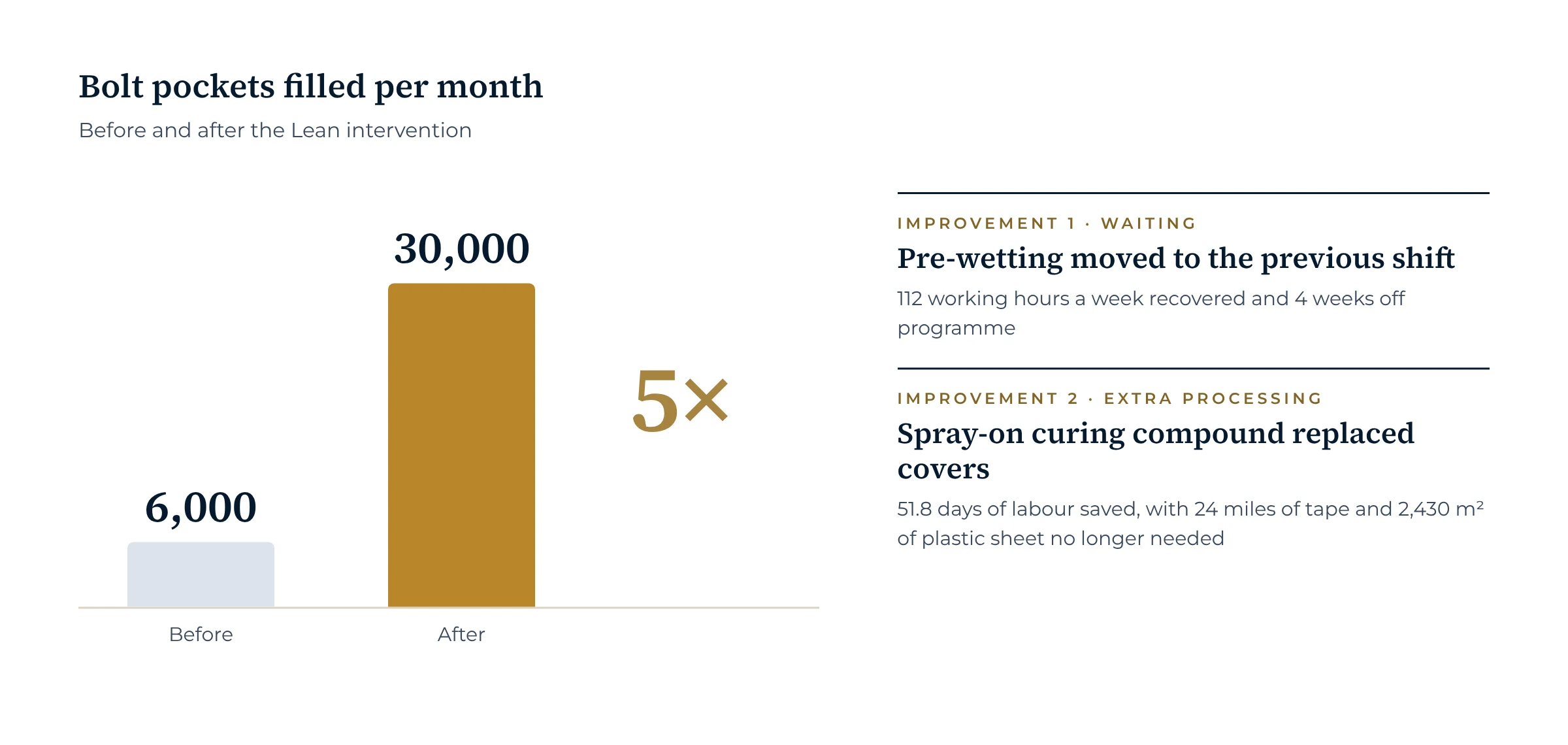
Two simple changes took bolt pocket infilling from about 6,000 a month to 30,000, taking 17 weeks off the programme.
Read the case study
Rather than a one-off review, we worked as an embedded improvement team. Effort went where the critical path and the potential savings were greatest, agreed with the operations team as priorities changed.
After the first improvement meeting with the client, we put a deployment plan in place, with templates to capture every improvement and lesson learned along the way.
Each one starts with the problem on site and ends with what changed.
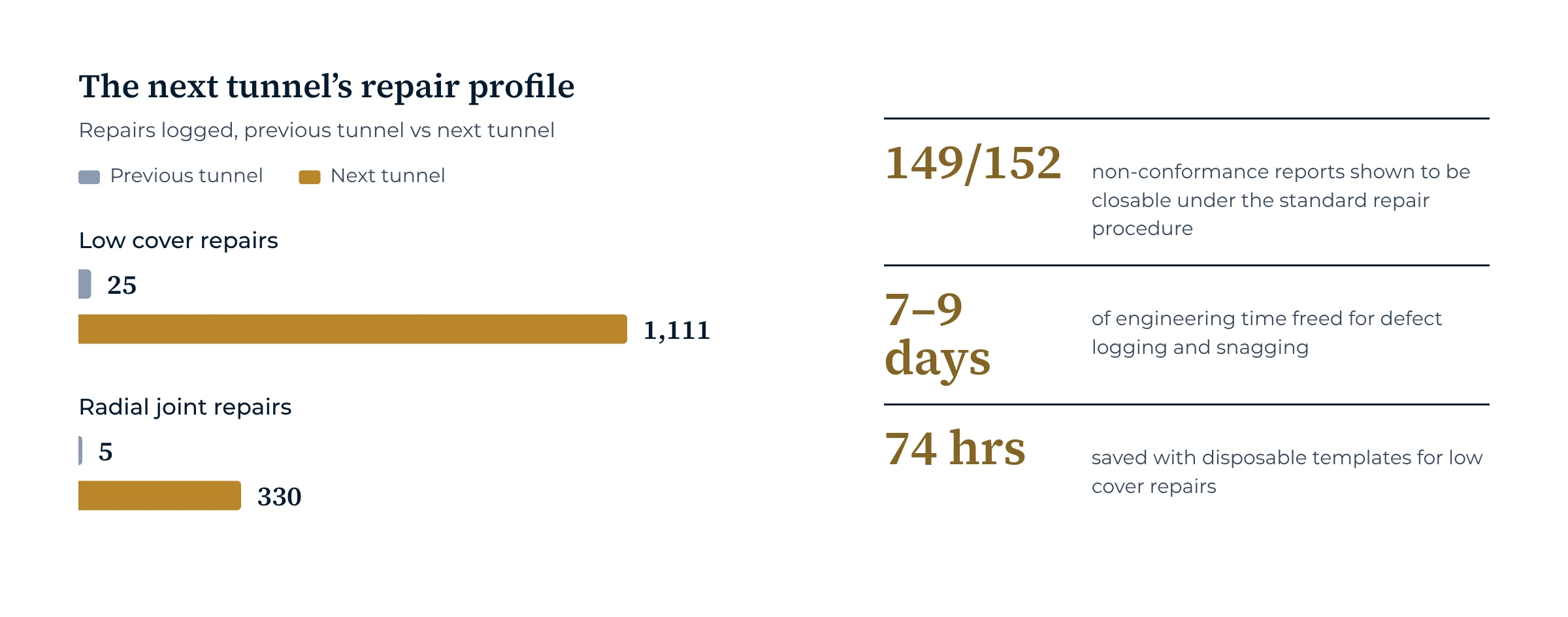
Observing an injection repair process showed only 22% of the time was value-adding. A curing trial proved both resin coats could go on the same day, so each repair could finish about 50% faster.
A new inspection and test plan, developed with the quality team, released four site engineers from inspection duties, with expected savings of more than £200K.
Every improvement was written up as a lesson learned, so other projects could find, remove and control the same wastes.
Client and project details have been anonymised. Project scale figures are from public sources; results are drawn from the engagement’s own reporting, and expected or potential savings are labelled as such.
We help construction and manufacturing organisations find and remove the waste that slows delivery, at any scale. Let’s talk about where yours is.