Case study 02 · Bolt pocket infilling
Five times the output on a critical-path task
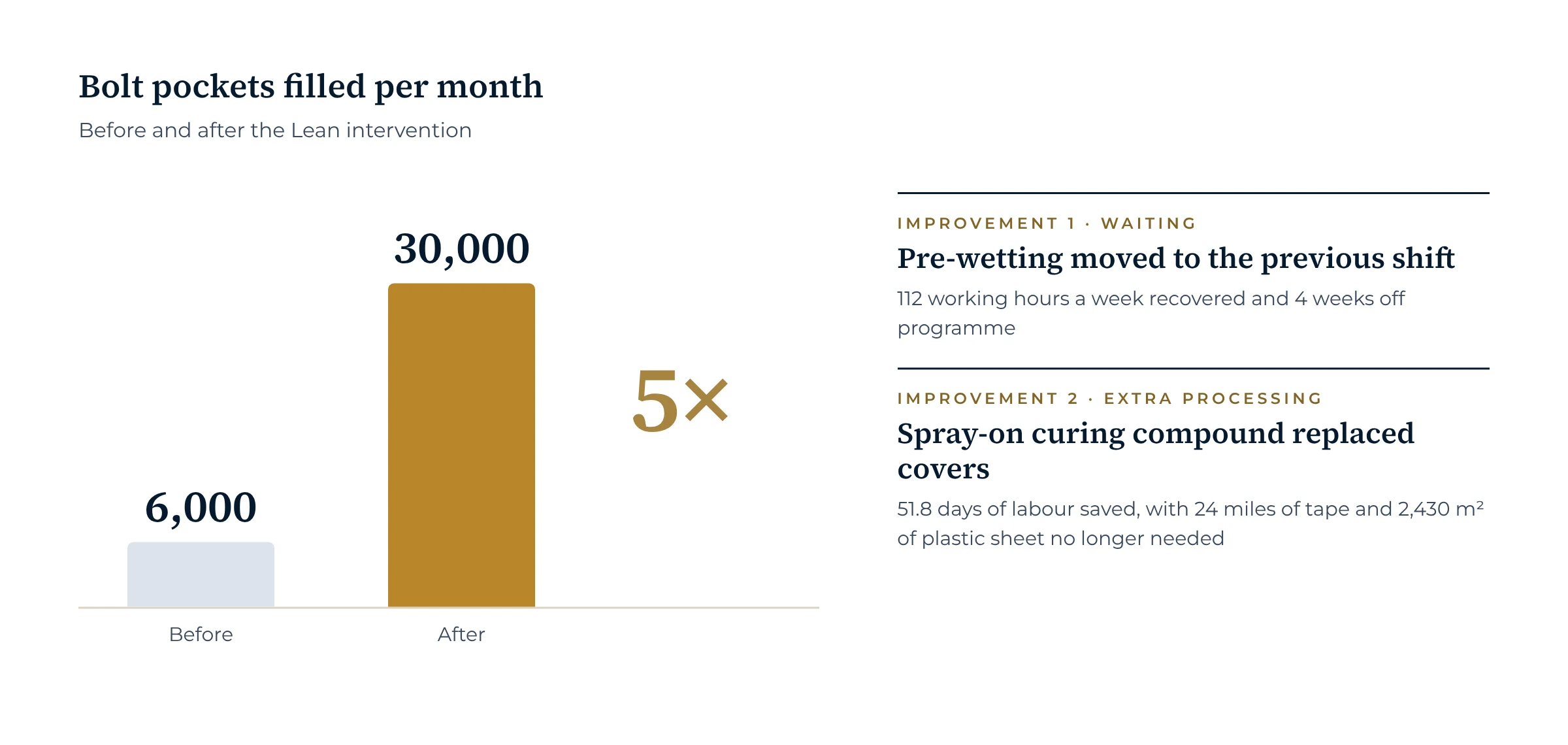
Two simple changes took bolt pocket infilling from about 6,000 a month to 30,000, taking 17 weeks off the programme.
Read the case studyBefore 4,221 tunnel segments could be coated, each one had to be high-pressure cleaned and, by design, taped. We questioned both. A new cleaning method achieved the same finish in a fraction of the time and water, and the taping step was removed altogether.
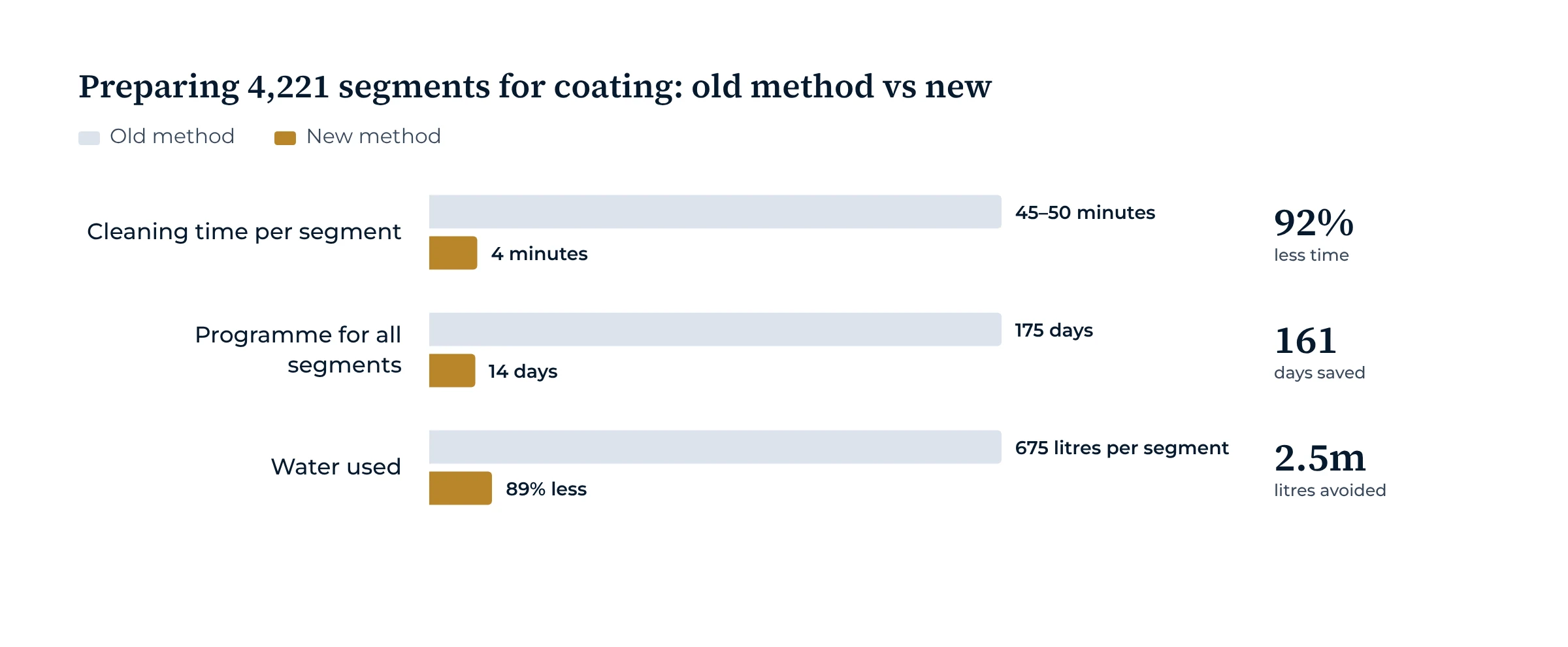
Ahead of thick coating, every segment in the cooling system had to be cleaned at 340 bar to remove dust, oil, grease and surface laitance. Each took 45 to 50 minutes and around 675 litres of water, and the wastewater then had to be removed from the tunnels.
The design also called for scrim tape on segments in the tunnel invert: a manual step that added time and created a risk of non-conformance.
We observed both processes during off-site trials, then worked with the designers, subcontractors and materials team to challenge them.
We could not see what value the scrim tape added for the client, and it raised the risk of non-conformance and rework after coating. We made that case to the designers, and the step was removed from 1,477 segments.
Through controlled trials with the subcontractor and materials team, we changed the cleaning method and equipment. The new approach reaches the same surface standard in about four minutes per segment.
We help construction and manufacturing organisations find and remove the waste that slows delivery, at any scale. Let’s talk about where yours is.